

Slow and steady weaving
A handwoven blanket and thoughts on the design process
I have a bad habit of giving my family members IOUs for handmade gifts each Christmas. Typically, it takes at least a year for them to actually receive the gift. Last year, I gifted my mother a handwoven plaid blanket. Over the holidays, I finally got started weaving.
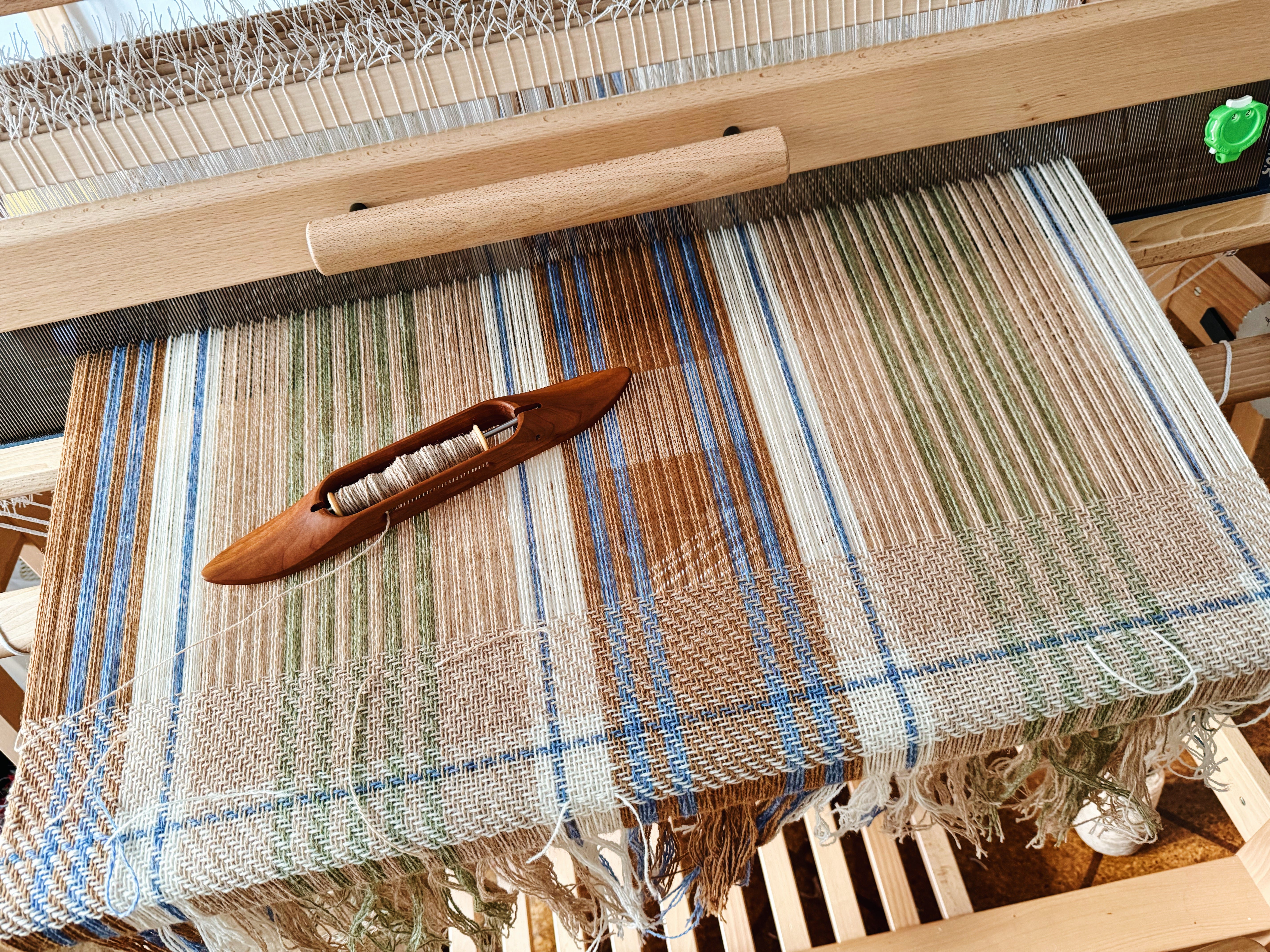
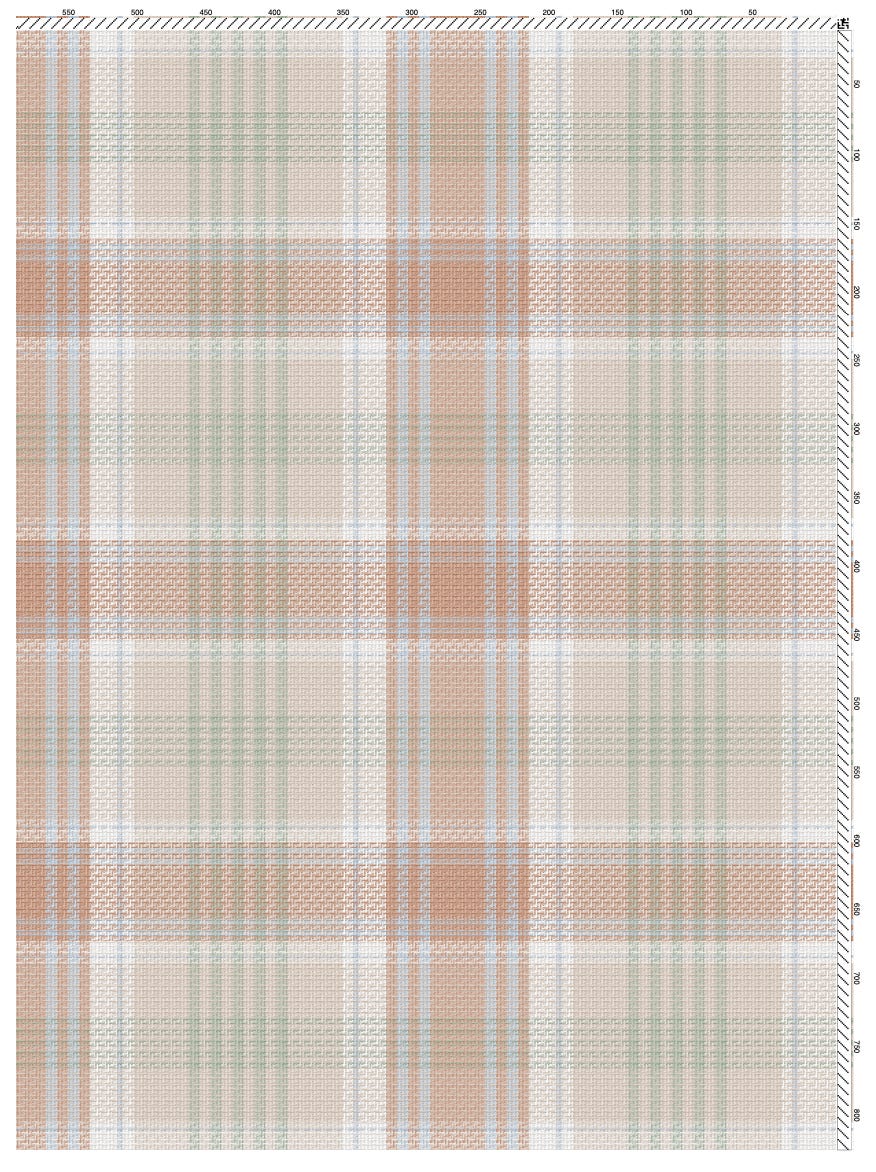
In weaving, it’s the prep work that takes the most time. First, there’s all the math that comes with planning a weaving draft to ensure you have enough yarn for the project and determining where it all goes.
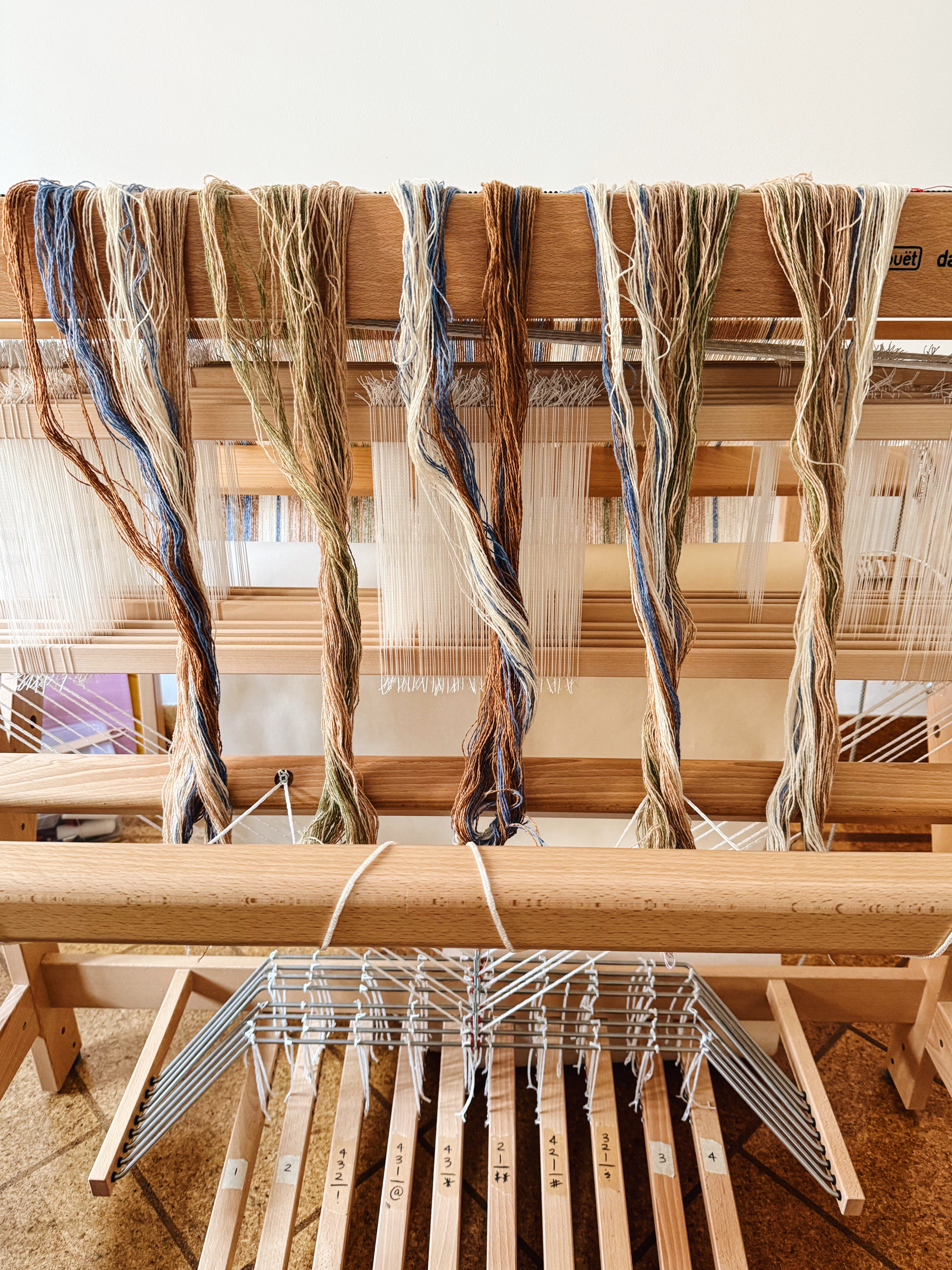
Then, there’s the process of getting it all on the loom. I spent a very relaxing week between Christmas and New Year’s winding the warp and threading the loom. There’s something very soothing about slowly unraveling and re-raveling yarn, threading 600 heddles, and tying on each of the ends.
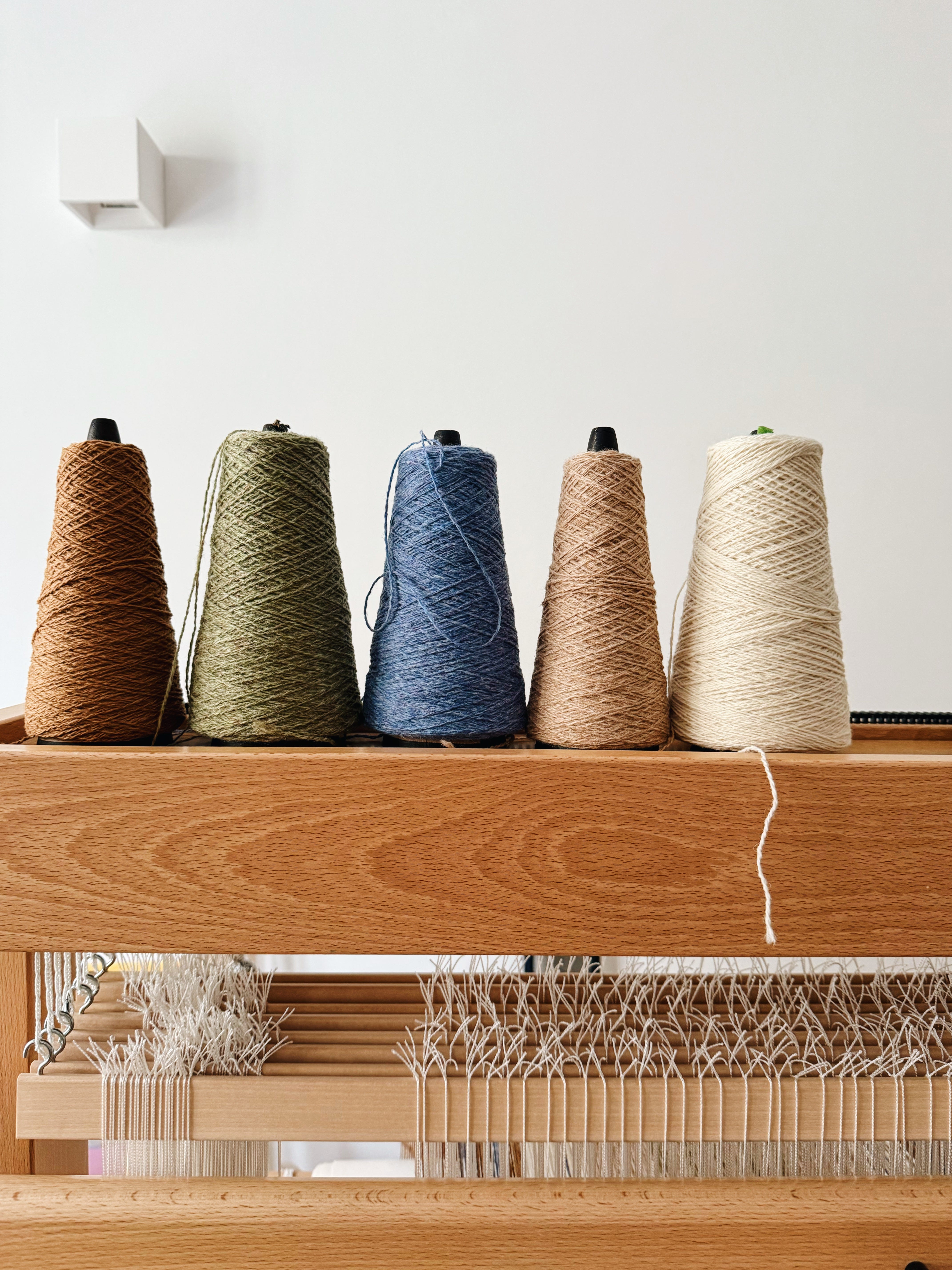
The very tactile nature of handcraft means that you really need to love your materials, or you will really hate working on your project. In the winter, I try to embrace the cold and work with seasonally appropriate, cozy yarns.
This wool yarn (Harrisville Shetland) is gorgeous and easy to work with. It smells very sheep-y, but doesn’t have that extra bit of lanolin that leaves hands feeling grimy. Typically wool yarns are thicker, meaning that projects can magically be both larger and finished more quickly.
It turns out that weaving is kind of the perfect project to work on between nap times, plus the motion of throwing the shuttle, and beating the yarn is super calming. I predict this blanket will be finished in the next few weeks.
Let's talk more about the design process
All needlework is bound by some sort of constraint: materials, time, money, skill, etc. I love constraints. My brain always has a zillion ideas for things to make; and physical constraints help me focus my energies when deciding what and how to make something.
When I started designing this blanket, I knew that it must end up being: 1) big (48”) and snuggly, 2) a muted plaid pattern, and 3) made of Harrisville Shetland wool. The first element was the most important to tackle because it required very specific structural consideration. After all, it would be the skeleton of the blanket. After figuring out the architecture, I could easily overlay the design and determine the amount of yarn needed.
Sometimes the structure isn’t the most important constraint. Sometimes it’s the color or amount of yarn I have available; sometimes a customer wants a specific type of design that ends up dictating the size; and sometimes I only have thirty minutes to embroider a gift before a friend’s birthday party.
When designing, I always list out the goals of a project and work from there. It’s helpful to envision what must be true at the end of the project and use those constraints to kickstart the planning process.
Applying design constraints to this project
I'll wrap up this roundabout musing on designing with constraints and get back to why it’s relevant for the plaid blanket.
I wanted a blanket that was at least 48” wide. Almost all snuggly yarns are notorious for shrinking during the finishing process. I wanted to try the much beloved Harrisville Shetland wool yarn for this project. It’s rumored that this yarn shrinks almost 20% when washed. I needed a blanket that was at least 58” wide, before washing, to get the right size at the end. My loom is fairly large, but still only 48” wide. If I wove it full width, in one layer, it would end up small (39” after shrinkage) and I would be disappointed. It would be more like a big, snuggly baby blanket.
The only way to make a piece of fabric wider than my loom is: a) to weave multiple pieces and sew them together at the end, or b) use a doubleweave structure to weave two layers. The first option could work if I wanted a piece-y, color blocked look, but my mother wanted a classic plaid. Visible seams weren’t going to cut it.
Doubleweave means that I am actually weaving two separate layers with a fold on one side connecting the two. The shuttle does a complicated dance, going through the bottom layer, back and forth through the top layer twice, then completes the circuit by going back through the bottom layer.
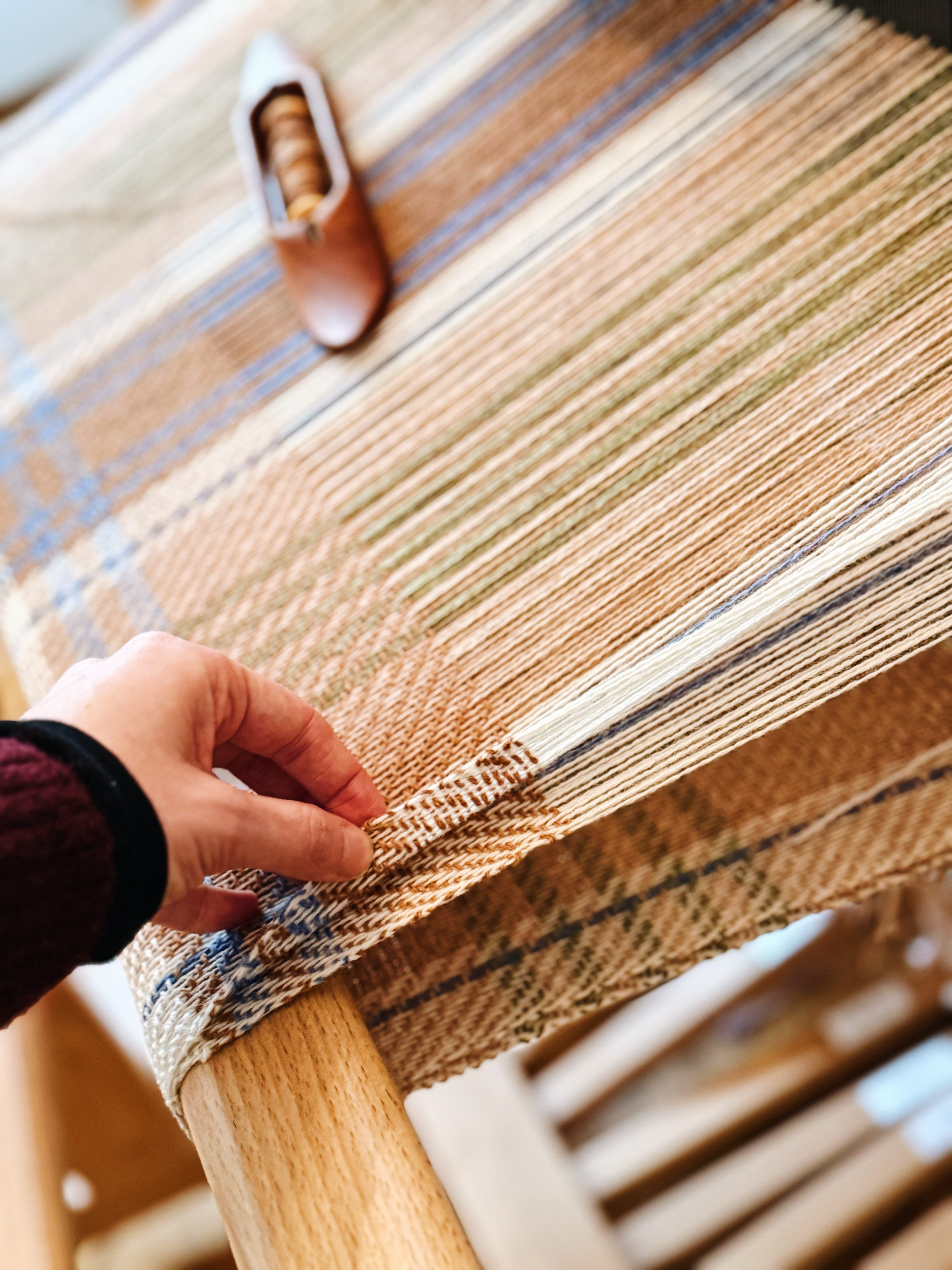
When I remove the blanket from the loom, I will be able to unfold it and voila, the finished piece will be double the width!
Beautiful